

XMedica Lymphoedema
Specialist support for living well with lymphoedema.
XMedica Lymphoedema supports people living with primary and secondary lymphoedema through assessment, compression therapy, skin care, self-management education and long-term review.
 A
Lymphoedema Assessment
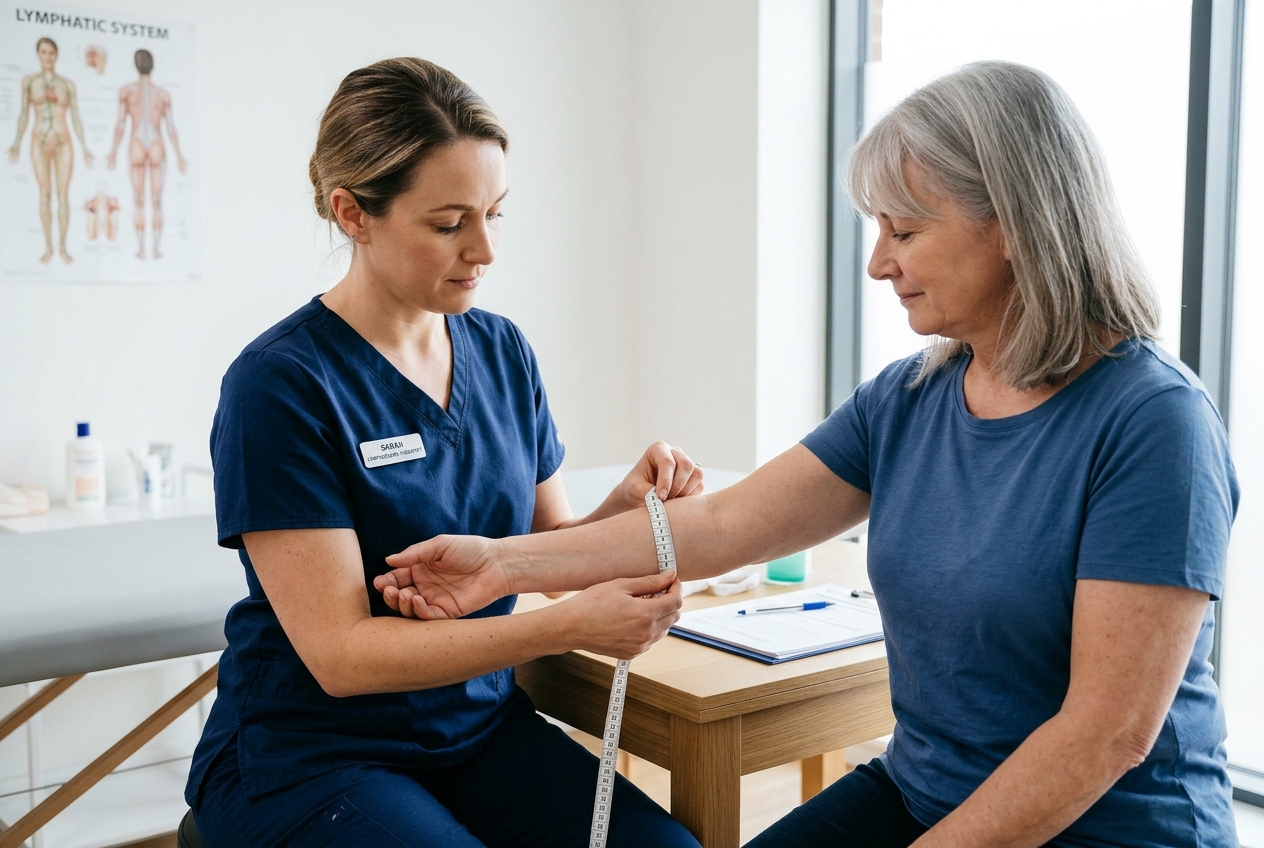
A detailed first appointment to understand your swelling, its history and its effect on daily life. Measurements are recorded so changes can be tracked and a personalised management plan agreed.
Who it may help
People with persistent swelling of an arm, leg or other area, those diagnosed with primary or secondary lymphoedema, and patients referred after cancer treatment.
What it involves
Review of your medical history and symptoms, examination of the affected area and skin, limb measurements, limb volume assessment where available, and care planning.
What to expect
An unhurried, supportive consultation. New or unexplained swelling should also be reviewed by your GP to rule out other causes.
Care and follow-up
A follow-up appointment is usually arranged to begin or review your management plan.
Treatments in this service
Initial lymphoedema assessment
A full first review of your swelling and health.
Patient history and symptom review
Understanding how and when the swelling developed.
Limb measurements
Recording measurements to monitor change.
Limb volume assessment
Volume calculation, where available.
Swelling assessment
Assessment of swelling, tissue texture and skin.
Personalised management plans
A plan agreed around your needs and goals.
 B
Lymphoedema Management
Lymphoedema is a long-term condition that can be managed. Individual management combines several approaches to help reduce and control swelling and support everyday comfort.
Who it may help
Primary lymphoedema, secondary lymphoedema (for example after surgery or cancer treatment) and chronic swelling needing ongoing support.
What it involves
A tailored combination of skin care, compression, movement and self-management guidance, with regular monitoring.
What to expect
Realistic goals and practical support. Outcomes vary from person to person and are discussed openly.
Care and follow-up
Regular review appointments adjust your plan as your condition changes.
Treatments in this service
Individualised lymphoedema management
A management approach built around you.
Ongoing swelling management
Continued support to help control swelling.
Monitoring and review
Regular checks to track progress.
Support for primary and secondary lymphoedema
Care for both inherited and acquired lymphoedema.
Long-term condition management
Support to live well with a long-term condition.
 C
Compression Therapy
Compression is a key part of many lymphoedema management plans. This service covers assessment for compression, garment advice, measurement and fitting where qualified, and bandaging where offered.
Who it may help
Patients whose care plan includes compression garments or bandaging, and those finding current garments uncomfortable or ineffective.
What it involves
Assessment of suitability, garment advice, accurate measurement and fitting where qualified, compression bandaging where offered, and review of comfort and effect.
What to expect
Guidance on putting on, caring for and replacing garments safely. Compression is only used where it is clinically appropriate.
Care and follow-up
Garments are reviewed regularly, as fit and needs change over time.
Treatments in this service
Compression therapy assessment
Assessment of whether compression is suitable for you.
Compression garment advice
Advice on garment types, wear and care.
Compression garment measurement and fitting
Accurate measuring and fitting, where qualified.
Compression bandaging
Multi-layer bandaging, where offered.
Review of compression treatment
Checking comfort, fit and effectiveness.
 D
Manual Lymphatic Drainage
Manual lymphatic drainage (MLD) is a gentle, specialised skin technique that may be used as part of a lymphoedema management plan. It is provided only by appropriately trained practitioners.
Who it may help
Selected patients with lymphoedema where MLD is considered appropriate as part of their wider care plan.
What it involves
Assessment of suitability, gentle hands-on treatment if provided by a trained practitioner, and information about how MLD fits with your other treatments.
What to expect
A relaxed, gentle treatment. MLD is not suitable for everyone and your practitioner will explain whether it is appropriate for you.
Care and follow-up
Treatment is reviewed after a course of sessions and adjusted as needed.
Treatments in this service
Manual lymphatic drainage assessment and treatment
If provided by appropriately trained practitioners.
Patient information about lymphatic drainage
Clear explanation of how the lymphatic system and MLD work.
Treatment review and follow-up
Reviewing the benefit of MLD within your plan.
 E
Skin Care and Infection Prevention
Healthy skin is essential in lymphoedema, as skin damage can increase the risk of infection such as cellulitis. This service helps you protect your skin and know when to seek help.
Who it may help
Anyone living with lymphoedema, especially those with dry or fragile skin, skin changes, or a history of cellulitis.
What it involves
Skin assessment and monitoring, advice on moisturising and hygiene, cellulitis prevention education and guidance on when to seek urgent assessment.
What to expect
Practical, easy-to-follow advice. Signs of cellulitis — such as new redness, heat, pain, increased swelling or feeling unwell — need prompt medical assessment.
Care and follow-up
Skin is reviewed at each appointment as part of your ongoing care.
Treatments in this service
Lymphoedema skin care
Daily skin care to keep skin healthy and intact.
Skin integrity monitoring
Regular checks for dryness, damage or change.
Infection and cellulitis prevention education
Understanding risks and how to reduce them.
Skin hygiene advice
Practical hygiene guidance for affected areas.
When to seek urgent clinical assessment
Recognising warning signs that need prompt care.
 F
Exercise and Self-Management
Gentle movement and good daily routines play an important role in managing lymphoedema. This service helps patients and carers build confidence in looking after the condition at home.
Who it may help
Patients wanting to take a more active role in their care, and carers or family supporting someone with lymphoedema.
What it involves
Appropriate movement and exercise guidance, limb elevation advice where appropriate, self-management education and daily care routines.
What to expect
Realistic, achievable routines that fit around your life and abilities.
Care and follow-up
Self-management is reviewed at follow-up appointments and adjusted as needed.
Treatments in this service
Movement and exercise guidance
Appropriate activity to support lymphatic flow.
Limb elevation advice
When and how elevation may help, where appropriate.
Self-management education
Knowledge and skills to manage day to day.
Daily care routines
Simple routines for skin, compression and movement.
Patient and carer education
Support for family members and carers.
 G
Ongoing Support
Lymphoedema needs long-term care. Regular reassessment keeps your management plan, measurements and compression up to date as your needs change.
Who it may help
Patients with established lymphoedema who need continued review and support.
What it involves
Regular reassessment, limb measurement reviews, compression management reviews and updates to your personalised care plan.
What to expect
Continuity, reassurance and a consistent point of contact for your lymphoedema care.
Care and follow-up
Review intervals are agreed with you according to the stability of your condition.
Treatments in this service
Regular reassessment
Planned reviews of your condition.
Limb measurement reviews
Repeat measurements to track change.
Compression management reviews
Keeping garments and compression appropriate.
Personalised care-plan updates
Adjusting your plan as needs change.
Long-term patient support
Ongoing support for living well with lymphoedema.
Services are subject to clinical assessment, practitioner scope and availability — please contact us to confirm a specific treatment is offered. XMEDICA is not an emergency service. If you have a rapidly worsening wound, signs of spreading infection, sudden swelling with pain or breathlessness, or feel very unwell, call 999 or attend A&E. For urgent non-emergency advice, call NHS 111.
Home visit availability
Other departments

