

XMedica Podiatry
Healthy, comfortable feet — assessed and cared for professionally.
XMedica Podiatry offers professional assessment and treatment for everyday foot health, nail and skin conditions, diabetic foot care and foot pain. Explore each service below to understand what it involves and what to expect.
 A
General Foot Care
Routine podiatry appointments that look after the everyday health of your feet. A podiatrist reviews your skin, nails and general foot comfort, provides hands-on care and explains how to keep your feet healthy between visits.
Who it may help
Adults wanting regular professional foot care, people who find it difficult to reach or manage their own feet, older adults and anyone noticing changes in foot comfort.
What it involves
A conversation about your foot health and medical history, a visual and hands-on foot assessment, routine nail and skin care, and practical advice tailored to you.
What to expect
A calm, unhurried appointment in clinic or at home where suitable, with findings explained in plain language.
Care and follow-up
Routine care is often repeated at regular intervals. Your practitioner will suggest a review interval based on your needs.
Treatments in this service
Routine podiatry appointments
Regular appointments for ongoing skin, nail and foot comfort care.
General foot health assessments
A structured review of skin, nails, circulation-related signs and foot comfort.
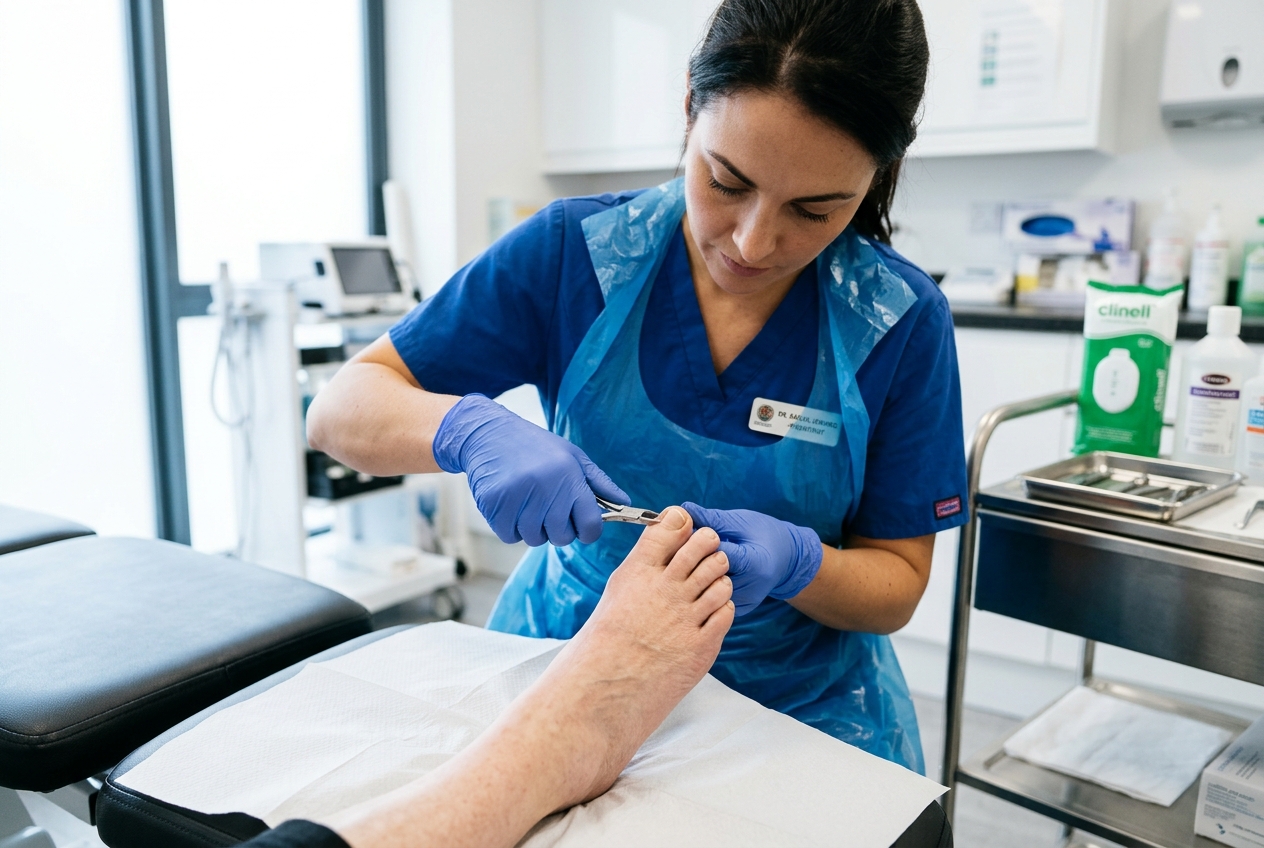
Nail cutting and routine nail care
Safe professional trimming and filing of the toenails.
Thickened nail care
Gentle reduction of thickened nails to improve comfort in footwear.
Difficult-to-reach nail care
Support for patients who cannot comfortably reach or manage their own toenails.
Foot hygiene and skin care advice
Practical guidance on washing, drying, moisturising and checking the feet.
Foot health education
Clear information to help you recognise changes and look after your feet day to day.
 B
Nail Conditions
Assessment and conservative care for toenails that are painful, thickened, discoloured, damaged or difficult to manage. The aim is to relieve discomfort and help you understand the likely cause.
Who it may help
Ingrown or curved nails, thickened nails, suspected fungal nail infection, nails damaged by injury or footwear, and nails that are painful to cut.
What it involves
Examination of the nail and surrounding skin, careful conservative nail care where appropriate, and advice on footwear, nail cutting technique and self-care.
What to expect
Treatment focused on comfort. Where a condition needs further investigation or a procedure that is not offered, you will be advised on appropriate referral.
Care and follow-up
Some nail conditions improve over several appointments. Your practitioner will explain whether review visits are recommended.
Treatments in this service
Ingrown toenail assessment and conservative treatment
Careful management of painful nail edges without surgery, where suitable.
Thickened toenails
Reduction and care of nails thickened by age, injury or other causes.
Fungal nail assessment and advice
Review of nail changes with guidance on management options.
Discoloured or damaged nails
Assessment of nail changes, with referral advice if anything needs further investigation.
Painful nail conditions
Conservative care to ease nail-related pain and pressure.
Nail care for additional foot-care needs
Nail care for patients with diabetes, circulation concerns or reduced mobility.
 C
Corns and Calluses
Corns and calluses are areas of thickened skin that form where pressure or friction is repeated. Professional care safely reduces this skin to improve comfort when standing and walking.
Who it may help
Hard corns, soft corns between the toes, callus under the ball of the foot or heel, and painful pressure points.
What it involves
Assessment of the affected area, safe reduction of hard skin with sterile instruments, protective padding where appropriate, and footwear guidance.
What to expect
Most patients notice improved comfort after treatment. The practitioner will explain what is causing the pressure and how to reduce it.
Care and follow-up
Corns and callus can return if pressure continues, so periodic maintenance appointments may be recommended.
Treatments in this service
Corn assessment and treatment
Identification and careful removal of painful corns.
Hard and soft corn care
Treatment for corns on pressure areas and between the toes.
Callus reduction
Safe reduction of thickened skin to relieve pressure.
Pressure-related skin problems
Review of areas affected by repeated friction or load.
Prevention advice and footwear guidance
Practical steps to reduce the chance of corns and callus returning.
 D
Skin and Heel Conditions
Care for common skin problems affecting the feet, from dry and cracked heels to athlete's foot and verrucae. Treatment aims to restore comfortable, healthy skin and prevent problems recurring.
Who it may help
Cracked or splitting heels, very dry or hard skin, itchy or peeling skin between the toes, verrucae and other common foot skin concerns.
What it involves
Skin assessment, gentle reduction of hard skin where appropriate, and advice on emollients, hygiene and suitable over-the-counter or prescribed options.
What to expect
Practical, respectful treatment with clear guidance. Verruca treatment is provided only where offered by your practitioner.
Care and follow-up
Skin conditions often improve with consistent home care. A review may be suggested to check progress.
Treatments in this service
Cracked heel treatment
Reduction of hard, splitting skin and advice to keep heels supple.
Dry and hard skin management
Care and guidance for persistently dry or thickened skin.
Athlete's foot assessment and advice
Recognition of fungal skin infection and management guidance.
Verruca assessment and treatment
Assessment of verrucae, with treatment where this service is offered.
Other common foot skin conditions
Review of other skin changes, with onward referral where needed.
 E
Diabetic Foot Care
People living with diabetes can be more vulnerable to foot problems. Diabetic foot care focuses on regular checks, safe nail and skin care, protection and early recognition of changes that need attention.
Who it may help
Adults with type 1 or type 2 diabetes, particularly those with reduced sensation, circulation concerns, previous foot problems or difficulty checking their own feet.
What it involves
A diabetic foot health check, foot risk assessment where within clinical scope, nail and skin care, footwear review and personalised prevention advice.
What to expect
A thorough, careful appointment. If any concern is identified, you will be advised clearly and referred to the appropriate service where needed.
Care and follow-up
Regular review is recommended for people with diabetes. Your practitioner will suggest a suitable interval based on your risk.
Treatments in this service
Diabetic foot health assessments
A focused check of skin, nails, sensation and circulation-related signs.
Foot risk assessment
Assessment of foot risk level, where within clinical scope.
Skin and nail care
Safe care of nails and skin for feet that need extra protection.
Footwear and foot protection advice
Guidance on shoes, socks and protecting the feet from injury.
Monitoring and appropriate referral
Ongoing monitoring and timely referral if changes are found.
Prevention education
Daily foot-check habits to help reduce the risk of complications.
 F
Foot Pain and Biomechanics
Assessment of foot and heel pain and how your feet function when standing and walking. Understanding the cause helps guide practical management, footwear choices and, where offered, orthotic support.
Who it may help
Heel pain, arch pain, discomfort in the ball of the foot, pain when walking or standing, and concerns about foot posture or walking pattern.
What it involves
Discussion of symptoms, examination of the foot and ankle, observation of walking and foot function, and biomechanical or orthotic assessment where offered.
What to expect
A clear explanation of likely contributing factors and a management plan. Where symptoms suggest another cause, you will be referred appropriately.
Care and follow-up
Progress is usually reviewed after a period of self-management, footwear changes or orthotic use.
Treatments in this service
Foot pain assessments
Assessment to understand the source and pattern of foot pain.
Heel pain assessment
Review of heel pain with practical management advice.
Assessment of walking and foot function
Observation of how the feet move and carry load.
Biomechanical assessments
Detailed functional assessment, where offered.
Orthotic assessment and provision
Assessment for insoles or orthoses, where offered.
Footwear advice
Guidance on footwear that supports comfort and foot function.
Management or referral for foot and ankle problems
A plan for your symptoms, or onward referral where appropriate.
Services are subject to clinical assessment, practitioner scope and availability — please contact us to confirm a specific treatment is offered. XMEDICA is not an emergency service. If you have a rapidly worsening wound, signs of spreading infection, sudden swelling with pain or breathlessness, or feel very unwell, call 999 or attend A&E. For urgent non-emergency advice, call NHS 111.
Home visit availability
Other departments

